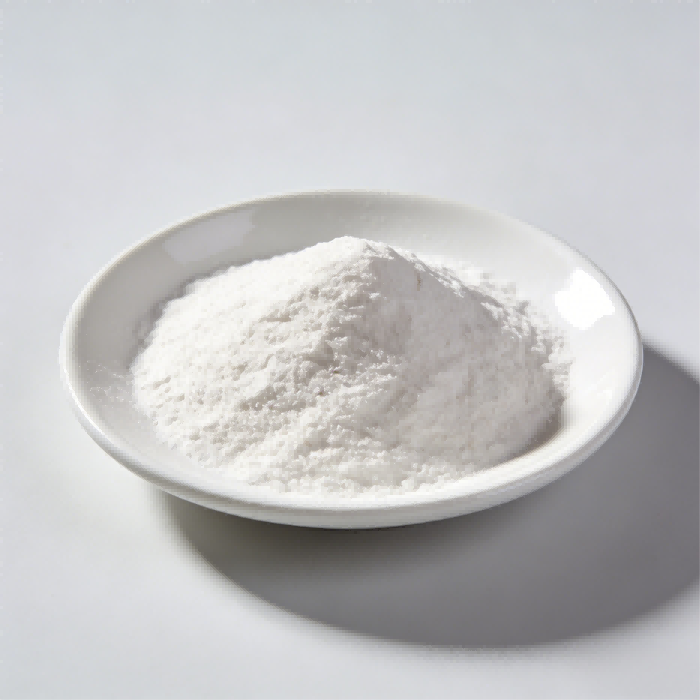
In industrial production and materials science, moisture generally refers to the total amount of water contained within a substance. However, based on its form and state, water can be further subdivided into the following levels:
LOI, also known as loss on ignition, refers to the percentage of mass lost by a material after it has been ignited under specified temperature and time conditions, relative to the original sample mass.
Particle size generally refers to the linear scale of a single particle in a powder (often expressed as equivalent diameter, in micrometers (µm) or nanometers (nm)). Since actual powders are aggregates of numerous particles, their size is often not uniform.
Whiteness is a numerical indicator of how close an object's surface color is to pure white, reflecting its ability to reflect visible light (especially the 457nm blue light band). An ideal pure white object should reflect light uniformly across the entire wavelength range, but actual materials exhibit different levels of whiteness due to variations in their absorption and reflection characteristics.