

The Concept and Significance of Particle Size
I. Particle Size
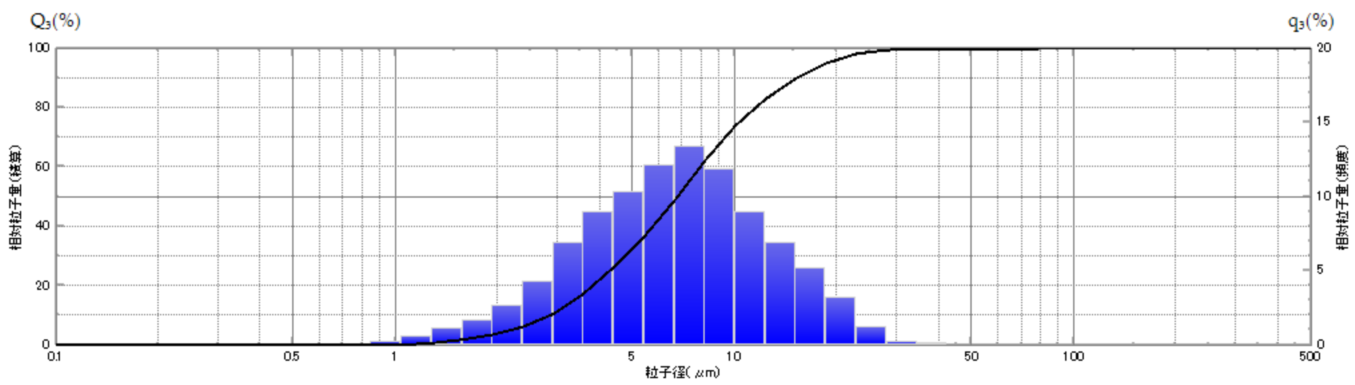
Particle size generally refers to the linear scale of a single particle in a powder (often expressed as equivalent diameter, in micrometers (µm) or nanometers (nm)). Since actual powders are aggregates of numerous particles, their size is often not uniform. Therefore, "particle size" generally encompasses three levels: single particle size, particle size distribution, and the corresponding measurement method. Particle size distribution, i.e., the proportion of particles of different sizes, reflects the actual physical properties of the powder more comprehensively than a single average particle size, and is particularly crucial in industrial applications.
Due to the irregular shape of particles, the meaning of particle size obtained by different measurement methods varies. Common methods include equivalent volume diameter based on volume (commonly used in laser methods), equivalent settling diameter based on settling behavior, and sieve diameter based on sieves. Corresponding measuring instruments mainly include laser particle size analyzers, settling particle size analyzers, image analyzers, and sieving equipment.
II. Significance for Inorganic Powder Materials
Particle size and its distribution are core factors determining the processing performance, application characteristics, and final product quality of inorganic powder materials, and can be considered a "key control switch" for material properties.
1.Reflecting Process Level and Stability
From raw materials to finished powder products, multiple crushing, grinding, and grading processes are required. The particle size distribution of the final product directly reflects the control precision and equipment level of the production process. Uniform distribution and good batch-to-batch consistency usually indicate that the production line has advanced grinding and grading technology and a strict quality control system.
2.Determining Key Application Performance
Specific Surface Area and Activity: Reduced particle size significantly increases specific surface area, directly affecting the reaction efficiency of materials such as catalysts and adsorbents, and improving dispersion and sintering behavior in coatings and ceramics.
Bulk Scale and Mechanical Properties: Reasonable particle size distribution can achieve the densest packing, improving strength and saving binder in concrete and composite materials.
Optical Properties: For example, the hiding power of titanium dioxide is optimal when the particle size is half the wavelength of light; fine and uniform particles contribute to the formation of a high-gloss surface.
Flowability and Processability: Particle size affects the angle of repose and conveying performance of powders. Excessively fine particles are prone to agglomeration, impacting packaging and usability.
3.Product Classification and Market Positioning: The industry generally classifies products according to particle size range, such as ordinary powders (tens to hundreds of µm), fine powders, micron-sized (1–10 µm), submicron-sized (0.1–1 µm), and nano-sized (<100 nm). The finer the particle size, the higher the technological threshold and added value; these products are typically used in high-tech fields such as electronic materials, biomedicine, and advanced coatings.
