

I. Basic Definition
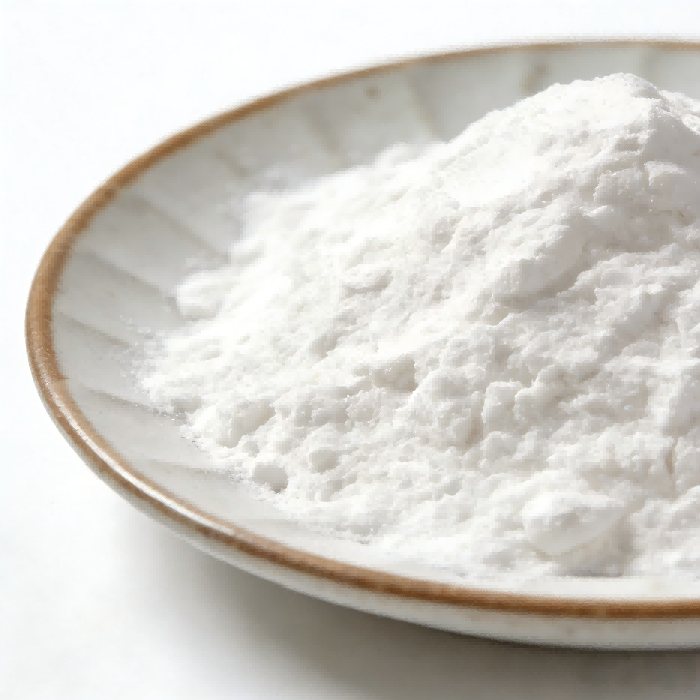
Bulk density, also known as apparent density or packing density, refers to the mass per unit volume of a powder in its naturally accumulated state, without external pressure.
The formula for calculating bulk density is:
Bulk density (ρ₀) = Powder mass (m) ÷ Powder natural accumulation volume (V₀)
Common units include g/cm³, kg/m³, or g/mL.
In contrast, tapped density (density after vibration or impact) is usually higher than bulk density, while true density (the density of the material itself) is the highest. The general relationship between the three is:True density > Tapped density > Bulk density.
II. Significance in Inorganic Powder Materials
For inorganic powders such as calcium carbonate, silicon dioxide, titanium dioxide, ceramic powder, and cement, bulk density is not only a basic physical property parameter but also a comprehensive indicator reflecting their process characteristics, specifically related to the following properties:
1.Particle Morphology
Spherical, regular particles have good fluidity and low porosity, resulting in a generally higher bulk density.
Irregular, flaky, or needle-shaped particles easily form "bridging" structures, resulting in more voids and a lower bulk density.
Porous or hollow particles (such as fumed silica) often have very low bulk density due to internal pores.
2.Flowability
A higher bulk density generally indicates less friction between particles and better flowability, which is beneficial for automatic feeding, conveying, and filling.
3.Interparticle Interactions
Fine powders are prone to agglomeration due to electrostatic and van der Waals forces, forming loose aggregate structures and reducing bulk density.
4.Particle Size Distribution
When particles of a single size are packed, the void space is fixed (e.g., the void ratio of uniform spheres is approximately 36%).
A reasonable particle size distribution (a mixture of large and small particles) allows smaller particles to fill the gaps between larger particles, thereby increasing the bulk density. This principle is widely used in industries such as ceramics and concrete.
III. Importance in Practical Applications
Packaging and Storage: Directly affects the volume of containers and storage space required for storing the same mass of material.
Conveying and Feeding: It is a key basis for designing the capacity and parameters of equipment such as pneumatic conveying systems and screw feeders. Forming Process:
In dry pressing (ceramics, powder metallurgy), it affects filling uniformity and green body density.
In slip casting, it is related to the solid content and rheological properties of the slurry.
Reaction and Sintering: A lower bulk density often corresponds to higher porosity and specific surface area, which is beneficial for catalytic applications; however, excessive shrinkage during sintering may affect product strength.
Composite Material Processing: When used as a filler in plastics, rubber, and coatings, it affects the uniformity of mixing and the volume fraction of the powder in the final product.
Summary:
Bulk density, as a fundamental physical property parameter of inorganic powders, acts like their "physical fingerprint," comprehensively reflecting characteristics such as particle morphology, particle size distribution, surface state, and flowability. This indicator is not only used for powder characterization but also serves as a crucial link between material properties and industrial production, significantly impacting process design, cost control, and the performance of the final product.
